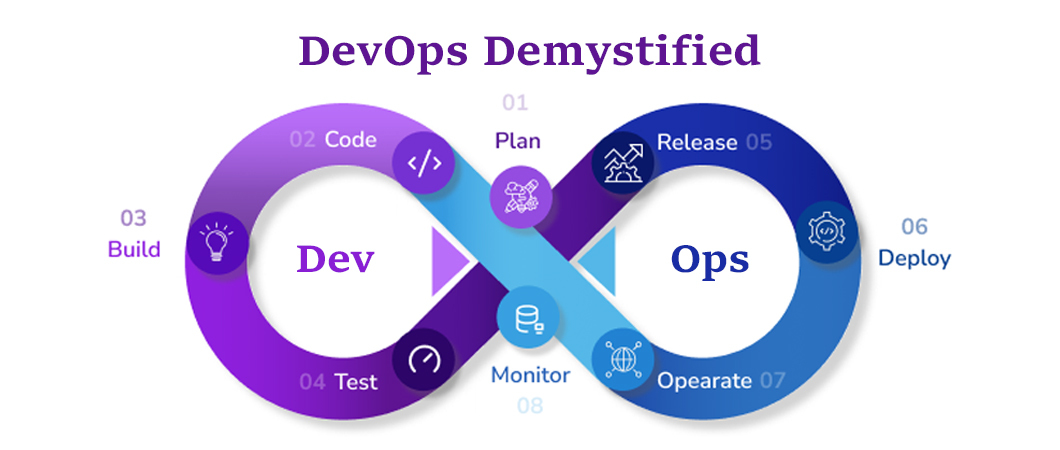
Understanding DevOps in the Digital Era
DevOps is not just a set of tools but a cultural and technological movement that integrates development and IT operations. It promotes:
- Automation: Reducing manual interventions through continuous integration and deployment.
- Collaboration: Breaking down silos between teams for seamless development.
- Monitoring & Feedback: Ensuring performance optimization and rapid issue resolution.
In essence, DevOps accelerates software development cycles, making businesses more agile and responsive to customer needs.
What is the Goal of a DevOps Methodology?
Many organizations ask, “What is the goal of a DevOps methodology?” The primary objectives include:
- Speed & Efficiency: Delivering software faster without compromising quality.
- Reliability: Ensuring stable releases through automated testing and monitoring.
- Scalability: Allowing businesses to handle growth seamlessly.
- Continuous Improvement: Using real-time feedback to enhance processes and user experience.
By aligning development and operations, DevOps fosters a culture of continuous innovation, which is essential for digital transformation.
The Role of DevOps in Digital Transformation
Digital transformation is all about leveraging technology to improve business outcomes. DevOps plays a pivotal role by:
- Shortening Development Cycles: Faster release times lead to quicker market adaptation.
- Enhancing Security: Automating compliance checks and security protocols.
- Enabling Data-Driven Decisions: Continuous monitoring helps optimize performance.
Businesses adopting DevOps practices can innovate faster, reduce costs, and gain a competitive edge.
DevOps Cloud Computing: A Perfect Synergy
The fusion of DevOps and cloud computing is a game-changer. Cloud platforms like AWS, Azure, and Google Cloud provide:
- Scalability: On-demand resource allocation for optimal performance.
- Automation: Cloud-native DevOps tools streamline workflows.
- Cost Efficiency: Pay-as-you-go models reduce infrastructure expenses.
By leveraging DevOps cloud computing, companies can achieve unparalleled agility and operational efficiency.
Key Components of a Successful DevOps Strategy
To implement DevOps effectively, organizations must focus on key components such as:
1. Continuous Integration & Continuous Deployment (CI/CD)
Automating code integration and deployment ensures faster, error-free releases.
2. Infrastructure as Code (IaC)
Managing infrastructure through code enhances scalability and consistency.
3. Monitoring & Logging
Real-time analytics help detect and resolve issues before they impact users.
4. Security Integration (DevSecOps)
Embedding security into DevOps ensures compliance without slowing development.
A well-structured DevOps strategy enhances agility, security, and innovation.
Cultural Shift: The Human Side of DevOps
Beyond technology, DevOps is a cultural shift that emphasizes:
- Collaboration: Breaking down barriers between development, operations, and security teams.
- Accountability: Shared responsibility leads to better efficiency and quality.
- Upskilling: Teams must continuously adapt to new tools and methodologies.
Companies that embrace DevOps culture experience higher productivity and employee satisfaction.
Agile & DevOps: A Powerful Combination
Many confuse Agile and DevOps, but they complement each other:
- Agile focuses on software development (Scrum, Kanban).
- DevOps focuses on software deployment and infrastructure management.
When combined, Agile & DevOps accelerate product delivery, ensuring rapid and reliable software updates.
Challenges in DevOps Adoption
Despite its benefits, implementing DevOps comes with challenges, including:
- Cultural Resistance: Teams may be reluctant to change.
- Complexity: Managing tools and processes can be overwhelming.
- Security Concerns: Integrating security without slowing down workflows.
Overcoming these barriers requires strong leadership, training, and the right tools.
DevOps Tools & Technologies Shaping the Future
The DevOps ecosystem is evolving with powerful tools like:
- CI/CD: Jenkins, GitHub Actions
- Containerization: Docker, Kubernetes
- Monitoring: Prometheus, Grafana
- Automation: Ansible, Terraform
By leveraging these cutting-edge DevOps tools, businesses can streamline development and operations.
Measuring DevOps Success
To track DevOps performance, businesses should monitor:
- Deployment Frequency: How often new releases go live.
- Lead Time: The time taken from development to deployment.
- Change Failure Rate: The percentage of failed releases.
- MTTR (Mean Time to Recovery): The time to resolve failures.
Using key DevOps metrics ensures continuous improvement and business growth.
Future Trends in DevOps & Cloud Computing
As technology advances, DevOps and cloud computing will evolve with:
- AI-Driven Automation: Machine learning for smarter DevOps processes.
- Edge Computing: Deploying applications closer to users for low-latency performance.
- Serverless Computing: Reducing infrastructure complexity for developers.
Staying ahead of these DevOps trends will be crucial for business innovation.
Final Thoughts
DevOps is at the heart of digital transformation, enabling organizations to innovate faster, improve security, and enhance operational efficiency. With the power of DevOps cloud computing, businesses can scale seamlessly and stay ahead in a competitive market.